


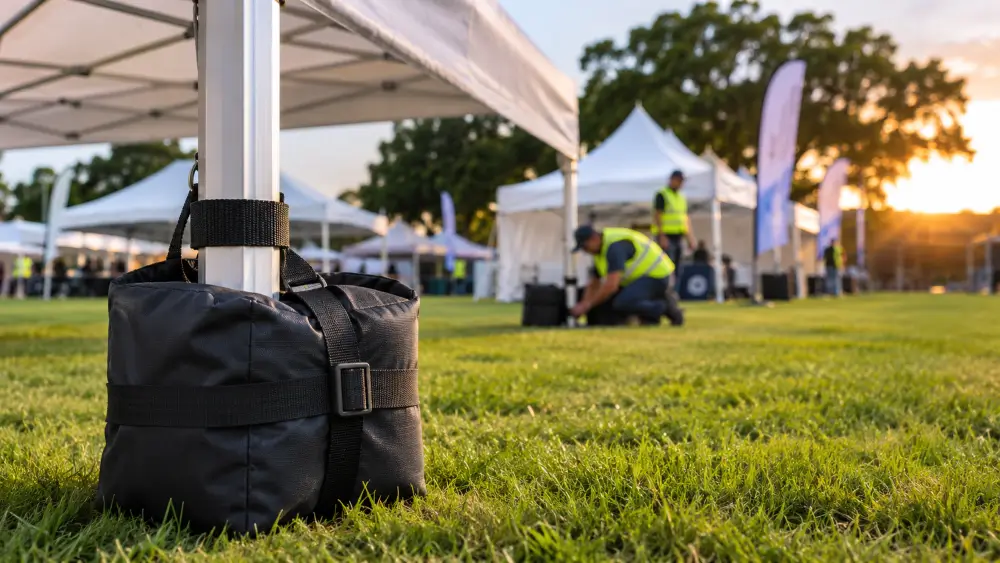
Every event crew can tell you that almost every time a structure fails outdoors is because of not having proper ballast and rigging. In outdoor shows, safety is the most important factor because you never know when a gust of wind might make your tent shake or blow it away. Your tent flying off in front of your visitors is the worst-case scenario. But having an unstable canopy is just as bad because visitors will be hesitant to enter. That’s why we have six best practices to help you properly secure your tent.
Top 6 Expert Best Practices To Keep Your Tent Secure and Stable in Outdoor Shows
1. No Anchoring
When you walk onto any show site, there will be loads of canopies that are ‘anchored’ using hope. Using one sandbag in each corner or, even worse, just having weights sat on the ground. Ballast needs to be properly attached to your frame. No ballast without strapping.
How much ballast you need will depend on how you have your structure set up. Most of the time you’ll need more ballast than you think. Your extra items, such as sidewalls, banners, and signage, will all add to the sail area, meaning your wind loading is multiplied. If you are using custom tents with printable walls on all four sides, you will be catching loads more wind than you would on an empty frame. This should be reflected in your ballast plan. Manufacturer specs always win over our gut feeling. Someone has done the calculations with wind tunnels and liability lawyers.
2. Unknown Ground Conditions
Soft and hard ground are two very different games. Depending on the ground type, you need to ensure you are anchoring properly. If your crew is going to use the same method on every show, they are taking a gamble. If it is firm grass, you will need to drive your pegs in at an angle away from the structure. Long pegs will help prevent uplift. If it is sandy or loose ground, you will need longer anchors or screw pegs. If it is hard ground, you should have engineering ballast or proper anchors. Anything makeshift will fail in these conditions. Cable ties to fences, rope to vehicle bumpers.
If there is anything underground, such as irrigation, conduits, or gas lines, make sure you carry out a utility location. This will take an hour, but if you hit the wrong line, you will lose your show. No win.
3. Old Gear
Your rigging gear won’t fail on day one; it will fail on day 400. Straps will start to fray due to vibration and UV. Shackles will rust after just one season of rain. Webbing will lose strength.
Pre-show checks are essential. If it’s cut, frayed, rusty, bent, or questionable, it’s not going to be used. Keep it simple for your crew to remember. Load-rated gear is cheap, and if you have a spare kit in your truck, you can avoid any issues. Just make sure you’re checking.
Also, whilst working at height, always have at least two people. Tools should be tied and hard hats worn. With power lines, always give yourself a bit more space. Poles and aluminum frames are long, and the weather can change. Don’t be tempted!
4. Late Weather Advice
Most crews will do a quick weather check and then just go with it. To prevent this, have one person with a name who is responsible for the weather throughout the show. They can decide to remove walls, lower your structure, or take a break. Gusts cause the damage. Gusts will pick up around buildings, gaps between your booths, and open areas. The weather won’t be average.
Have clear guidelines for your crew. If the wind is consistently X, then remove your sidewalls. If it’s Y, then lower/empty your structure. Decide on the thresholds whilst sitting around a calm planning table. Don’t decide on the spot when your adrenaline is pumping, and everyone is watching. After any serious weather event, walk around all your structures. Damage will occur in the joins and anchoring points. Even if it has survived, it could have suffered damage.
5. Small Structures
Most show sites have a hierarchy. Big frames will have a ballast plan, but smaller items like entry umbrellas, banners on the pavement, and pop-ups will be put up using your gut. These are still sails! If you have a branded market umbrella, you need to ensure you follow the same rules as bigger structures. Ensure you have the correct ballast weight for the base and ensure it is tilted properly. Loose banners should also be removed using the same weather triggers. Physics doesn’t care how big something is.
6. Keep it Boring
The crews who have had years of shows with no incidents will have a boring routine. They will do the same pre-shift walk-through, checks, person responsible for the weather and anchoring, and debrief. This is what a safe culture looks like from the inside. It may look boring from the outside, as no one has to explain a close call at your next planning meeting.
End Point
Having a safe outdoor show isn’t about having a poster on your trailer. It’s about having healthy habits. Proper ballast with calculations for how your structure is set up. Anchoring to suit the ground type. Checking your hardware. Having someone with a name responsible for the weather with clear triggers. Apply the same to your small structures. Have a spare rigging kit to hand. Keep it boring! The best compliment you can get from an event crew is that nothing happened. Keeping it boring is the whole point of the job.