


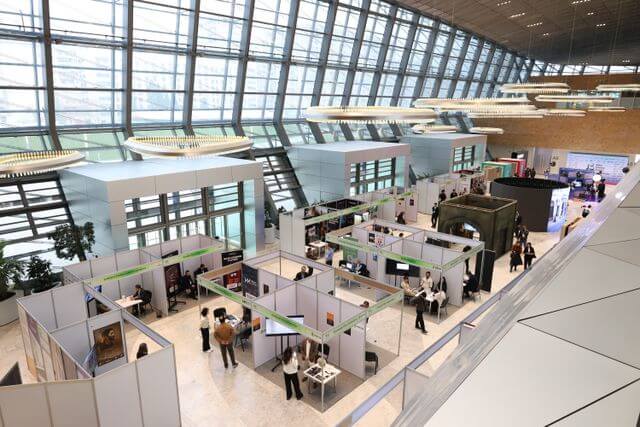
There is no better piece of real estate than visibility at a show or conference. Four aisles around an island exhibit allow for an opportunity to be a destination instead of just another exhibit in the show. This openness opens up space for immersive demonstrations, hospitality areas, meeting spaces, bold architecture, and 360-degree branding. But a larger footprint doesn’t necessarily mean more attention and more engagement. The size, structure, messaging, and experience of custom trade show exhibits are best when created with an objective in mind. The most memorable island booths create a space to share a brand story from all angles, with a natural, meaningful flow through the exhibit.
5 Design Strategies for Creating an Unforgettable Island Exhibit
- Make Every Side a Brand Opportunity
The biggest benefit of an island method is 360-degree visibility. The difference between an island exhibit and an inline booth is that there isn’t a true back to the booth, as the space may be accessed from many different angles. Each exposed side has the potential to be an opportunity to communicate the brand and catch the eye.
Most trade show exhibit companies take a different path with the design, which is to determine the main and secondary lines of vision before creating the visual structure. The topmost side may feature the strongest headline or product message, and there are different faces to support the brand by providing complementary graphics, product images, lighting, or architectural features.
It’s also important to be consistent. Sides should not be treated as exhibits. Using a consistent color scheme, typography system, logo usage, and message hierarchy makes it easy for people to identify the brand no matter how they approach your event.
- Build a Visitor Journey Instead of a Collection of Displays
It can become quite confusing when demonstrations, counters, lounges, screens, and product displays are used without a clear relationship in a large booth. Spatial planning leads visitors naturally through the island from one use to another.
A door that is open is a good way to create a welcoming environment, if it doesn’t make a “noose.” Once there, product demonstrations, interactive stations, hospitality areas, and meeting spaces can be arranged to suit the planned route of the visitors.
The various zones should be used for different purposes. While an open demonstration space allows for learning through discovery, the quieter meeting spaces can be used for deeper discussions. There should be areas for staff to store and work, which are accessible without blocking the movement of visitors.
- Use Height Strategically to Command Attention
Vertical design is more feasible in island exhibits, as the structure is not necessarily directly against other exhibits. Towers, overhead signs, overhead branding, sculptural structures, and lighting that is raised up can assist a booth in staying visible throughout the exhibition hall.
But height itself shouldn’t be a competition; it should be used to support the design. The rules of the venue may have tight restrictions on exhibit height, hanging signs, rigging, structural engineering, and covered elements.
There should therefore be a clear purpose for a strong vertical element, such as reinforcing brand recognition, identification of the booth from a distance, a product demonstration, or an architectural focal point.
- Combine Technology With Human Interaction
LED walls, interactive displays, projection, touchscreens, product demonstrations, and more can make for a momentous visual experience. But technology is most effective if it enhances dialogue.
A large screen showing some generic advertising may catch the eye, but won’t provide a lot of reason for people to come to the booth. When you demonstrate a product, show people the solutions, let them see it, or give them an experience, it’s easier for them to see why they need to stay.
Technology should also be set up based on visitors. The combination of screens on the main aisles to create awareness and interactive stations further back within the exhibit can help to draw in the interest of the visitors.
- Design for Comfort, Conversation, and Conversion
An island exhibit is not a place you want to be afraid to go to. Just a few simple features like comfortable seating, hospitality areas, meeting rooms, charging stations, refreshments, and well-planned conversation spaces can help keep visitors in the exhibit.
Open spaces are ideal for informal contact; semi-private to enclosed meeting rooms are ideal for qualified prospects or existing clients. Use clear zoning to avoid large crowds blocking product demonstrations or major pathways.
The exhibit’s commercial intent should be evident in the design. Lead collection areas, demonstration spots, appointment areas, and branded calls-to-action should be placed at the right points in the visitor’s journey.
End Point
This is one of the most impressive island exhibits, which is both architecturally significant and designed for the visitor. A large booth doesn’t have to be just a space to be ignored. The four-sided visibility, thoughtful zoning, vertical branding, interactive technology, and the comfort of engaging areas can all make a big booth a real destination on the trade show floor. The best designs capture attention from afar and create opportunities for viewers to approach, engage, and join an existing group for a deeper, more substantive conversation. If each design decision is made in the interests of both the brand and the visitor experience, then an island exhibit is more than a great structure; it’s a powerful business environment.