


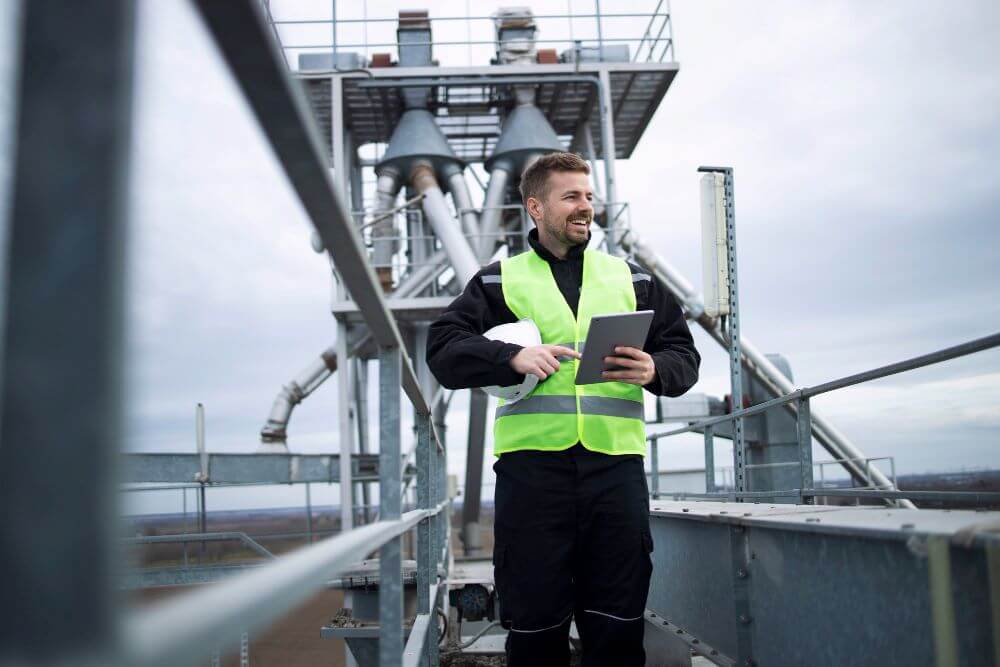
The oil and gas industry operates in some of the world’s most challenging and remote environments. These sprawling operations, often located far from urban centers, are vital to the global economy but are also exposed to significant risks. From equipment theft and vandalism to operational failures and environmental hazards, the need for constant, reliable oversight is paramount. Traditionally, securing these assets involved manned patrols and basic camera systems. Today, the integration of Industrial Internet of Things (IIoT) solutions is transforming oil field surveillance, creating a new paradigm of smart, connected, and proactive security and operational management.
This shift moves beyond simple monitoring. It leverages a network of intelligent devices, sensors, and data analytics platforms to provide a holistic view of an entire operation in real-time. By combining advanced video technology with the vast data-gathering capabilities of IIoT, companies can enhance security, improve safety, boost operational efficiency, and ensure regulatory compliance more effectively than ever before. This article explores how this powerful integration is reshaping the landscape of asset protection in the oil and gas sector.
The Evolution from Traditional Monitoring to Smart Surveillance
For decades, oil field security relied on physical barriers, manual patrols, and analog camera systems. While these methods provided a basic level of deterrence, they were inherently reactive and limited in scope. Security personnel could only be in one place at a time, and traditional cameras often produced low-quality footage that was difficult to analyze, especially after an incident had already occurred. This reactive approach meant that by the time a threat was identified, significant damage or loss might have already taken place.
The advent of digital technology and IP cameras marked a significant improvement, allowing for remote viewing and digital recording. However, the true revolution began with the rise of the Industrial IoT. IIoT refers to the network of interconnected sensors, instruments, and other devices networked together with industrial applications. When applied to oil field surveillance, this concept connects everything from high-definition cameras and thermal imagers to pipeline pressure sensors and access control gates. This creates a unified ecosystem where data from disparate sources can be collected, aggregated, and analyzed centrally. Instead of just seeing what is happening, operators can now understand why it is happening and even predict what might happen next.
Core Components of an Integrated IIoT Surveillance System
An effective IIoT-driven surveillance strategy for oil fields is not a single product but a layered system of interconnected technologies. Each component serves a specific function, and their combined power provides comprehensive situational awareness.
- Advanced Camera Technologies: Modern surveillance goes far beyond standard visual cameras. High-definition (4K) and thermal imaging cameras are crucial. Thermal cameras can detect unauthorized personnel or overheating equipment in complete darkness or harsh weather conditions, while explosion-proof cameras are specifically designed to operate safely in volatile environments. Pan-tilt-zoom (PTZ) cameras, often automated, can track moving objects or conduct programmed guard tours of a facility.
- IoT Sensors: This is the backbone of the IIoT integration. A wide array of sensors can be deployed across an oil field to monitor various parameters. This includes motion sensors for perimeter security, acoustic sensors to detect pipeline leaks, gas detectors for identifying hazardous vapor releases, and vibration sensors on machinery to predict maintenance needs. Each sensor acts as a digital nerve ending, feeding crucial data back to the central system.
- Connectivity and Network Infrastructure: The data generated by cameras and sensors must be transmitted reliably, often over vast distances. A robust network is essential. This can involve a combination of fiber optic cables, wireless mesh networks, cellular (4G/5G) connections, and even satellite communications for the most remote locations. The network must be secure to prevent cyber threats and resilient enough to withstand the harsh conditions of an oil field.
- Data Analytics and Artificial Intelligence (AI): Raw data from thousands of sensors and cameras is overwhelming for human operators. This is where AI and machine learning algorithms become indispensable. AI-powered video analytics can automatically detect specific events, such as a person crossing a restricted boundary, a vehicle loitering near a valuable asset, or even a worker not wearing the proper personal protective equipment (PPE). Predictive analytics can analyze sensor data over time to forecast equipment failures, preventing costly downtime.
- Centralized Command and Control Platform: All this technology is managed through a unified software platform, often called a Physical Security Information Management (PSIM) or a Video Management System (VMS). This platform provides operators with a single dashboard to view live video feeds, receive automated alerts, manage access control, and review incident reports. Mobile integration allows field personnel and managers to access this information from a tablet or smartphone, enabling a rapid and coordinated response to any event.
Boosting Operational Efficiency and Safety with IoT Data
While the primary driver for deploying advanced oil field surveillance is often security, the benefits extend deep into operational management and safety. The same IIoT infrastructure used to detect intruders can also be used to optimize daily workflows and prevent accidents. For example, data from sensors on pumpjacks and compressors can be analyzed to schedule preventative maintenance before a critical failure occurs. This proactive approach minimizes unplanned downtime, which can save a company millions of dollars in lost production.
Safety is another area where this integration delivers immense value. AI analytics can monitor video feeds to ensure compliance with safety protocols, such as verifying that workers are in designated safe zones during specific operations. Gas sensors can provide early warnings of toxic leaks, automatically triggering alarms and alerting personnel to evacuate. In the event of an emergency like a fire, the integrated system can instantly provide first responders with live video feeds, access control to the site, and information on the location of personnel, enabling a faster and more effective response. This transformation of surveillance from a purely security-focused tool to a comprehensive operational intelligence platform is a key advantage of the IIoT approach.
Addressing Challenges in Implementation
Integrating IIoT solutions with oil field surveillance systems is not without its challenges. The sheer scale and remoteness of these operations present significant logistical hurdles. Deploying and maintaining a reliable network infrastructure across hundreds of square miles of difficult terrain requires specialized expertise and substantial investment.
Cybersecurity is another major concern. Every connected device, from a camera to a sensor, represents a potential entry point for a cyberattack. A breach could not only compromise sensitive security data but could also be used to disrupt physical operations, leading to catastrophic consequences. Therefore, a robust cybersecurity strategy, including network segmentation, encryption, and regular vulnerability assessments, must be an integral part of any IIoT deployment.
Finally, managing the immense volume of data generated by these systems requires powerful analytics platforms and skilled personnel to interpret the information. Companies must invest in both the technology and the training needed to turn raw data into actionable intelligence.
Final Analysis
The integration of Industrial IoT solutions represents a fundamental evolution in oil field surveillance. By moving beyond traditional, passive monitoring, oil and gas companies can now build smart, proactive systems that enhance security, improve operational efficiency, and foster a safer working environment. This connected ecosystem of cameras, sensors, and intelligent analytics provides unprecedented situational awareness, allowing operators to detect threats, prevent failures, and respond to incidents with greater speed and precision.
While challenges related to cost, logistics, and cybersecurity remain, the strategic benefits are undeniable. The ability to monitor remote assets in real-time, predict equipment failures, and automate safety compliance provides a powerful return on investment. As technology continues to advance and costs decrease, the adoption of integrated IIoT surveillance systems will become less of a competitive advantage and more of an operational necessity for succeeding in the modern energy landscape. The future of securing the world’s energy infrastructure is not just about watching; it’s about understanding, predicting, and acting.